

Solutions
keyboard_arrow_downServices
keyboard_arrow_downSupport & Resources
keyboard_arrow_downCompany
keyboard_arrow_downContact

Benefits of the Randox Apo C-lll Assay
Immunoturbidimetric method
The immunoturbidimetric method limits interference from Bilirubin, Haemoglobin, Intralipid® and Triglycerides, producing more accurate results.
Exceptional correlation
A correlation coefficient of r=1.00 was displayed when the Randox apo C-III assay was compared to commercially available methods.
Excellent measuring range
The Randox apo C-III assay has a measuring range of 2.06 – 21.7mg/dl for the comfortable detection of clinically important results.
Liquid ready-to-use
The Randox apo C-III assay is available in a liquid ready-to-use format for convenience and ease-of-use.
Dedicated calibrator and controls available
Randox offer dedicated apolipoprotein calibrator and controls for a complete testing package.
Applications available
Applications available detailing instrument-specific settings for the convenient use of the Randox apo C-III assay on a variety of clinical chemistry analysers.
Ordering information
| Cat No | Size | |
|---|---|---|
| LP3865 | R1 2 x 11ml (L) R2 2 x 5ml | Enquire Kit Inserts RequestsView MSDSBuy Online |
(L) Indicates liquid reagent
Instrument Specific Applications (ISA’s) are available for a wide range of biochemistry analysers. Contact us to enquire about your specific analyser.
Clinical Significance and Physiological Significance
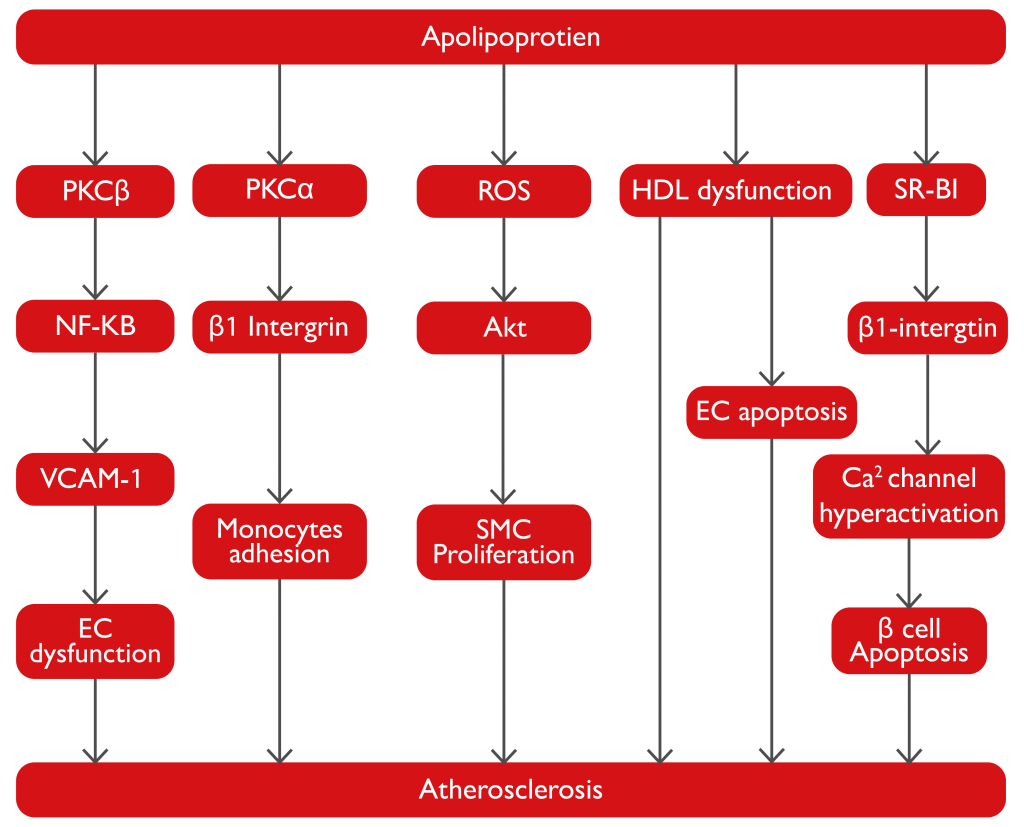
Not only is apo C-III a key regulator in the metabolism of triglycerides, but it is also an independent risk factor for CVD. Not only does apo C-III contribute to CVD through the regulation of triglycerides but also through its direct atherogenic effects, promoting atherosclerosis (fig 1) 1.
Clinical Significance and Physiological Significance
Apo C-III is composed of 79 amino acids and has a molecular weight of 8.8kDa. Apo C-III promotes hypertriglyceridemia via several mechanisms. Firstly, like apo C-II, apo C-III also inhibits the activity of LPL, distributing lipid lipolysis. Apo C-III hinders the binding of apolipoprotein B and apolipoprotein E to the hepatic receptors resulting in the delayed catabolism of triglyceride – rich lipoproteins (TRLs). Finally, apo C-III prefers the production and secretion of very low-density lipoproteins (VLDL) in the liver 1.
Get in touch to discover more
To find out more about Apolipoprotein C-III and other diagnostic reagents, enquire now.