
Solutions
keyboard_arrow_downServices
keyboard_arrow_downSupport & Resources
keyboard_arrow_downCompany
keyboard_arrow_downContact

Get in touch to discover more
To find out more about HER2 biochip, enquire now.
What is HER2?
Human Epidermal Growth Factor Receptor 2 (HER2) is a protein found on the surface of cells. It plays an important role in regulating cell growth, division, repair and survival.
In some cancers, cells produce unusually high levels of HER2. This can encourage cancer cells to grow and spread more quickly. Around 15% of breast cancers are HER2-positive. Although HER2-positive breast cancers can be more aggressive, there are targeted treatments specifically designed to block HER2 and help control the disease.
What is HER2 ECD?
HER2 has a part called the extracellular domain (HER2 ECD), which extends outside the cell. This part can be released, or "shed", from the surface of cancer cells and enter the bloodstream, where it can be measured using a blood test.
When HER2 ECD is shed, the remaining part of the HER2 protein can continue to send signals that promote tumour growth and progression.
Because HER2 ECD can be measured from a blood sample, testing may provide a convenient, non-invasive way of assessing changes in HER2 activity over time.
What can a HER2 ECD blood test tell you?
HER2 ECD blood testing is not currently recommended as a standalone test for diagnosing breast cancer, as it does not detect all cases and may not be sensitive enough to rule out cancer.
However, HER2 ECD levels may provide useful additional information in people who have already been diagnosed with cancer. Depending on the individual circumstances, testing may help clinicians:
- Monitor changes in cancer over time
- Assess how a cancer is responding to treatment
- Monitor disease progression
- Identify changes that may warrant further investigation
- Provide additional information when considering HER2-targeted treatment
A significantly elevated HER2 ECD level, or a substantial change in levels over time, may provide additional information that can be considered alongside other clinical findings and investigations
HER2 ECD and other cancers
HER2 ECD may also have a role in monitoring other cancers in which HER2 can be involved, including some cancers of the stomach, bowel and lungs. However, HER2 ECD levels should always be interpreted alongside other clinical information. An elevated result does not necessarily mean that cancer is present.
Higher HER2 ECD levels have also been observed in some people without cancer, including people with:
- Obesity
- Insulin resistance or Type 2 diabetes
- Liver disease
Available on the Evidence RABTA
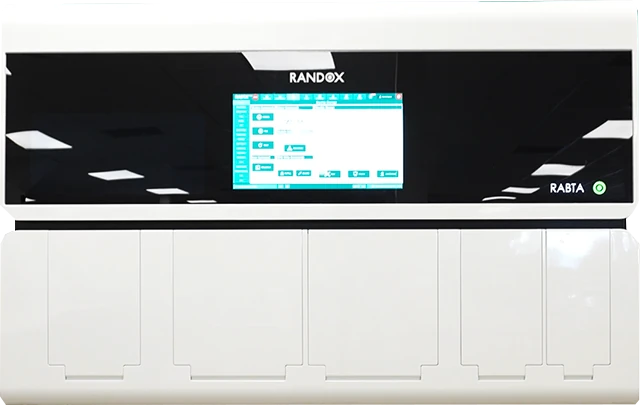
The Evidence RABTA (Random Access Biochip Technology Analyser) sets a new standard in laboratory diagnostics, combining true random access testing with advanced Biochip Array Technology to deliver fast, flexible, and high-volume multi-analyte analysis.