Solutions
keyboard_arrow_downServices
keyboard_arrow_downSupport & Resources
keyboard_arrow_downCompany
keyboard_arrow_downContact
Prostate Cancer (PCa)
Get in touch to discover more
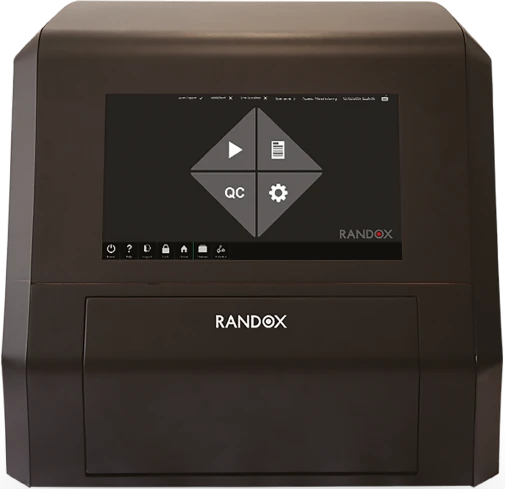
To find out more about the Evidence MultiSTAT or to discuss arranging a demo, enquire now.
Why use Biochip?
Prostate Cancer (PCa) is the 2nd most commonly occurring cancer in men and the 4th most common cancer overall. About 1 in 8 men will get Prostate Cancer in their lifetime.
Histological assessment of prostate tissue obtained by Transperineal ultrasound-guided biopsy of the prostate (TURP) is commonly used in PCa diagnosis. This method has however been associated with a 75% negative biopsy rate and the procedure also associated with increased rate of UTI (15.5%). Another commonly used method of diagnosis is through histological assessment of prostate tissue obtained by Trans Rectal ultrasound-guided biopsy of the prostate (TRUS). This method however has an estimated false negative rate of 1-in-3 with three quarters reporting at least one minor complication after biopsy.

Prostate Cancer Risk
Biochip provides risk stratification to triage patients presenting with symptoms at primary care from low to high risk of prostate cancer. This could allow low-risk patients to be monitored in primary care, while medium and high-risk patients can be referred urgently for secondary care investigations.
Randox investigated 19 biomarkers in a recent study (McNally et al., 2022), identifying 4 novel markers which were demonstrated to be clinically significant in identifying patients with prostate cancer.
Applications
- Primary Care GPs
- Hospital Labs
- Urology Departments
- Oncology Departments
| Biochip Markers | |||
|---|---|---|---|
| EGF | IL-8 | MCP-1 | tPSA |
Single-Plex PSA Assays
The PSA test is commonly used to screen for prostate cancer. However, due to its limited specificity, a more accurate tool is necessary for detecting prostate cancer.
Randox provides a range of single-plex PSA assays which can be used in different combinations to aid in reducing false positives, determining benign disease rather than cancer, and improving early detection and cancer grading.
Assays
- Total PSA
- [-4, -5, -7] Pro-PSA
- Nicked PSA
- [-2] Pro-PSA
- Free PSA
BIOCHIP COMBINATIONS

Reduce or defer secondary care investigation referrals
to lessen the burden on healthcare waitlists for treatment

Biochip Array Technology
Utilising algorithmic probability and risk stratification to triage patients into 'low' and 'high' risk categories for potential risk of PCa

Facilitate clinical decision making
with stratification testing for patients with favourable risk disease
The Evidence MultiSTAT
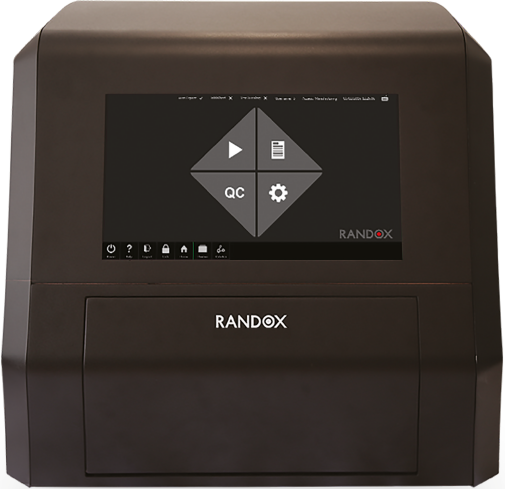
Evidence MultiSTAT
The Evidence MultiSTAT is an easy to use, small footprint analyser facilitating on-site simultaneous detection of multiple biomarkers.
Using chemiluminescence as a measurement principle, the Evidence MultiSTAT consistently delivers accurate results.
With minimal sample preparation required, this versatile benchtop analyser can achieve accurate, quantitative results in minutes.

MultiSTAT Cartridge
The Evidence MultiSTAT cartridge contains the reagents required for the chemiluminescent reaction to take place incorporated into its wells.
The process from sample entry to results can be completed in 2 simple steps, with minimal risk of human error.
No other components are required.